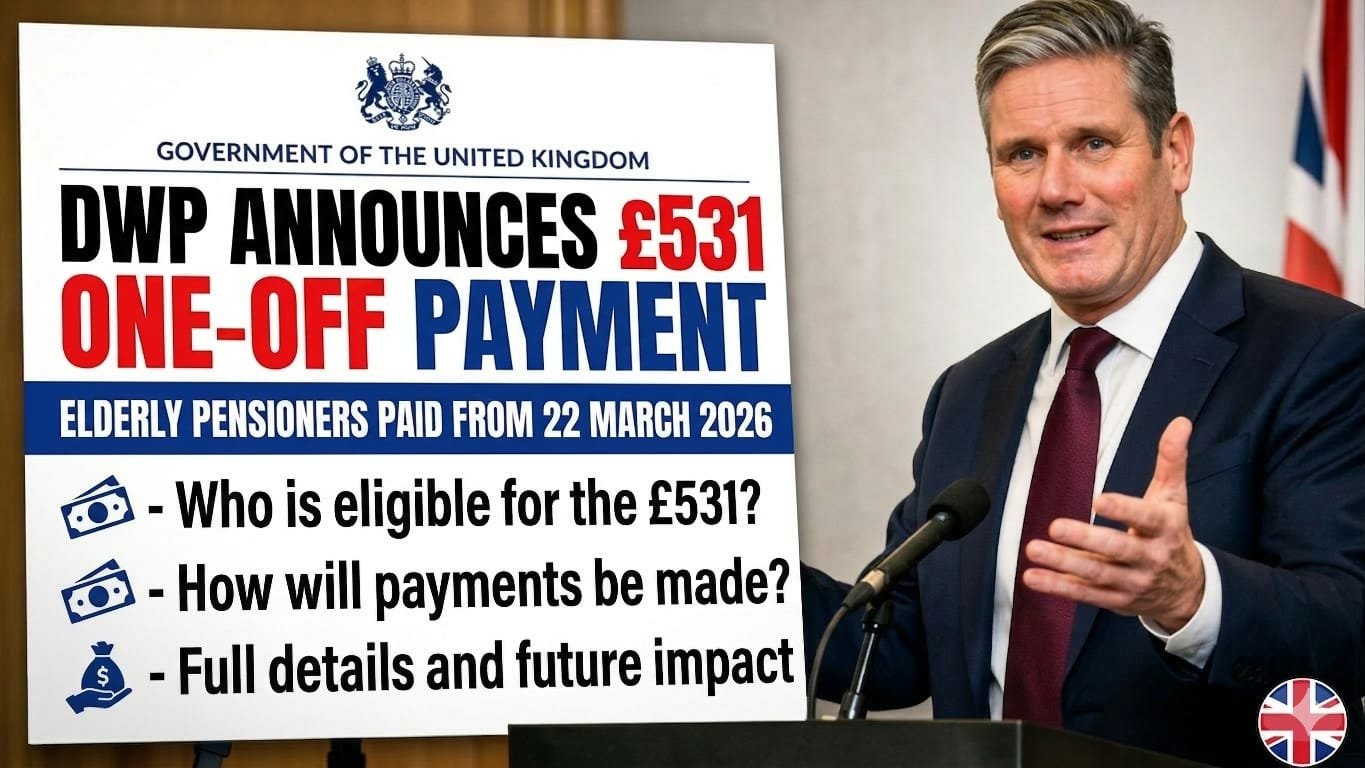
Many elderly pensioners across the UK have recently noticed headlines about a £531 one-off payment reportedly announced by the Department for Work and Pensions (DWP). As living costs continue to affect older households more than most, news of extra financial support has quickly gained attention.
For many retirees who depend mainly on their State Pension, even a single additional payment can help cover essential expenses such as heating bills, groceries, and everyday necessities. Naturally, people want to know whether this payment is real, who qualifies, and when the money will arrive.
Here is a clear and simple explanation of what this £531 payment means and what pensioners should expect.
Why the £531 Payment Is Being Discussed
Over the past few years, the UK government has introduced several financial support measures to help vulnerable groups cope with higher living costs. Pensioners, particularly those on fixed incomes, have been among the groups most affected by rising energy and food prices.
The £531 figure being discussed is connected to additional financial support linked with pension and cost-of-living assistance measures aimed at older residents. As information spread online, many people began referring to it as a newly announced DWP payment.
However, understanding how the payment works is important to avoid confusion.
Is the £531 Payment a One-Time Bonus?
The payment is described as a one-off support amount, meaning it is not part of regular monthly pension payments. Instead, it is intended as temporary financial assistance to help eligible pensioners manage ongoing expenses.
Unlike annual pension increases, this type of payment does not permanently raise State Pension income. It is designed as short-term support.
Who May Be Eligible for the Payment
Eligibility is expected to focus mainly on elderly pensioners receiving certain income-related benefits or financial assistance.
Those most likely to qualify include:
- State Pension recipients on low income
- Pension Credit claimants
- Individuals receiving income-related benefits
- Pensioners facing financial hardship
Exact eligibility may vary depending on benefit status and individual circumstances.
Payment Date – Starting 22 March 2026
According to current reports, payments are expected to begin from 22 March 2026.
Not everyone will receive money on the same day. Payments are normally processed in stages, meaning some pensioners may receive funds slightly earlier or later depending on banking schedules.
Once issued, the payment should arrive directly into the same bank account used for existing benefit or pension payments.
Do Pensioners Need to Apply?
In most cases, no application is required.
DWP support payments are usually issued automatically to eligible recipients using existing benefit records. This means pensioners generally do not need to fill out forms or contact offices unless instructed otherwise.
If someone qualifies, the payment should appear automatically.
Why Additional Support Is Being Provided
Although inflation has slowed compared to previous years, many pensioners still feel pressure from everyday costs. Energy bills, food prices, and housing expenses remain higher than they were several years ago.
Older households often have limited opportunities to increase income, which is why targeted financial support continues to play an important role.
One-off payments help provide immediate relief without permanently changing benefit structures.
How the Payment Will Appear in Bank Accounts
When issued, the payment typically shows up with a reference linked to DWP or benefit payments. Pensioners may notice:
- A separate payment entry
- Normal bank transfer notification
- No change to regular pension payment dates
The amount should arrive independently from usual pension income.
Important Things Pensioners Should Check
Even though payments are automatic, it can help to ensure personal details are up to date.
Pensioners should:
- Confirm bank account details are correct
- Watch for official letters or notifications
- Check benefit eligibility status
- Avoid responding to unofficial payment messages
These steps help prevent delays or confusion.
Warning About Online Scams
Whenever financial support news becomes popular, scams often increase.
Pensioners should remember:
- DWP never asks for payment to release funds
- Personal details should not be shared through unknown links
- Official payments do not require registration through social media
If unsure, always verify information through official government sources.
Public Reaction to the Announcement
Many pensioners have welcomed news of additional support, saying that even one-off payments can make a difference during expensive months.
Advocacy groups continue to highlight the financial challenges faced by older citizens, particularly those relying solely on State Pension income.
While opinions differ on whether support should be larger or more frequent, extra payments are generally viewed positively.
What This Means Going Forward
The £531 payment reflects ongoing efforts to provide targeted assistance rather than permanent benefit increases. Similar support measures may continue depending on economic conditions and future policy decisions.
For pensioners, staying informed about eligibility and official updates remains the best way to ensure they receive any available help.
Final Thoughts
The announcement of a £531 one-off payment starting from 22 March 2026 has understandably attracted attention among UK pensioners. While it is not a permanent pension increase, it represents additional financial support aimed at helping elderly households manage ongoing expenses.
Eligible pensioners are expected to receive payments automatically, offering some extra financial breathing room during a time when many are carefully managing their budgets.
As always, checking official updates and avoiding misleading online claims will help ensure pensioners receive accurate information and genuine support.